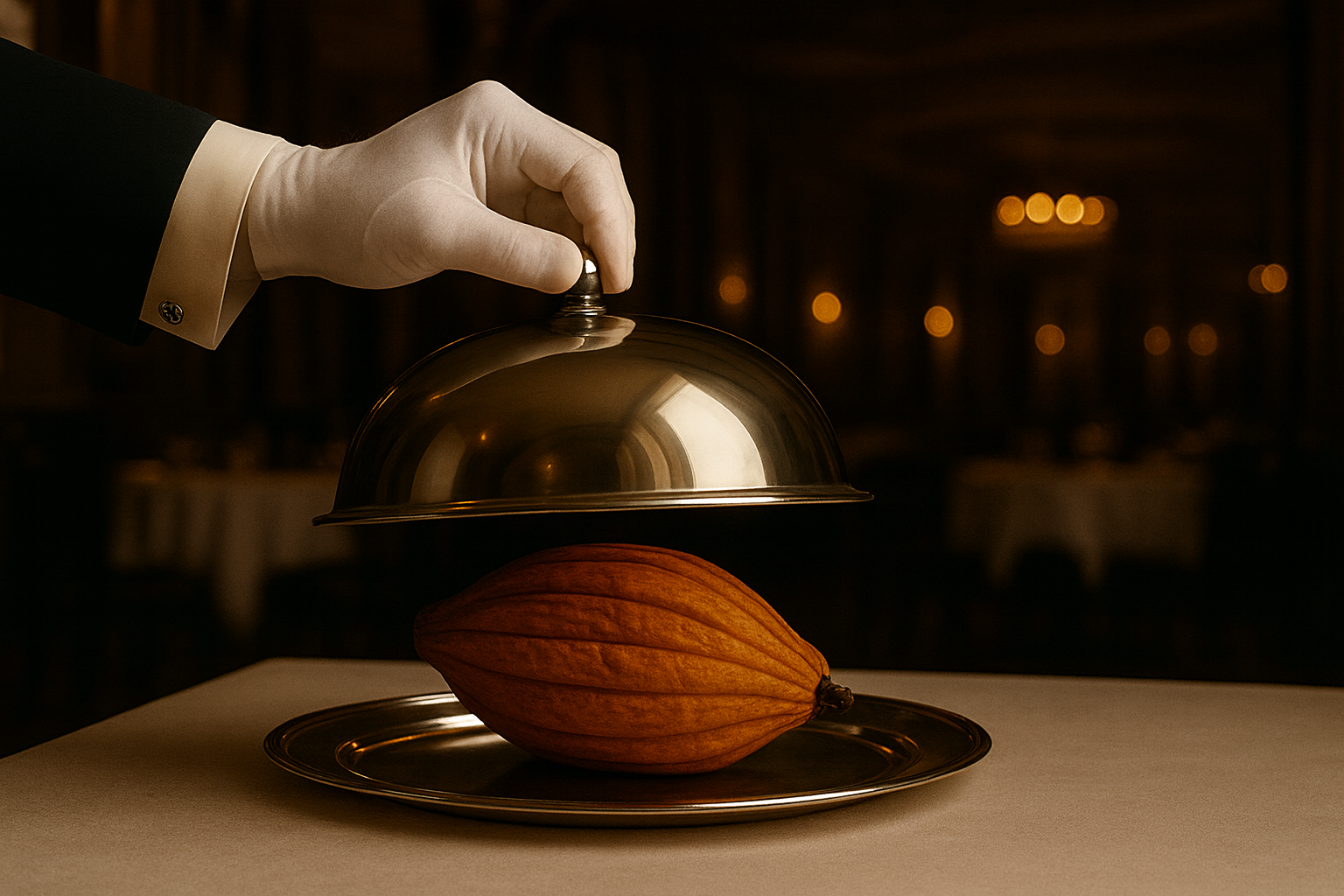
EVERYTHING IS SOURCED… EXCEPT THE CHOCOLATE
SILVA CACAO & FRIENDS EXPLORE FINE DINING’S SWEET BLIND SPOT
At SILVA Cacao, we’re unapologetic gourmands. We talk about food at work, we talk about food after work, and every time we visit a fine dining restaurant, the next day is practically a ritual: we sit, reflect, and ask ourselves the same question.
How can a restaurant serve extraordinary vegetables, perfectly sourced fish, rare teas… and then finish with chocolate desserts or friandises that taste like nothing in particular?
During one of these post-dinner debriefs, Jan finally put words to what all of us had been thinking for years: ‘Everything is meticulously sourced, except the chocolate.’
We couldn’t stop wondering why. And yet, we would still happily indulge -and gush about it the next day, because even a dessert that isn’t exceptional can still delight. But what we really crave, and what we know and source ourselves, is chocolate that speaks of origin, care, and craft.
So Jan decided to dig deeper. He reached out to a few people in our broader SILVA Cacao framily -chefs-turned-makers, pioneering chocolate makers, and long-standing voices in the bean-to-bar world, to hear how they see this blind spot, and why fine dining hasn’t yet embraced specialty cacao the way it has embraced just about everything else.
INSIDE THE CRAFT: THE PEOPLE WHO SEE WHAT FINE DINING MISSES
BEHIND FINE DINING’S SWEET SPOT
To understand why high-end restaurants still overlook specialty cacao, Jan turned to members of our SILVA Cacao framily -experts who live and breathe bean-to-bar chocolate, from those with haute cuisine backgrounds to seasoned chocolatiers with decades of craft experience. They shared how they perceive the challenges, the strategies they use to navigate them, and their insights and advice for helping specialty chocolate finally earn its place at the fine-dining table.
OUR SILVA CACAO FRAMILY EXPERT LINE-UP…
… AND THEIR EXPERT INSIGHTS
… AND THEIR EXPERT INSIGHTS
FRÉDÉRIC BLONDEEL – Coffee-roaster-turned-cacao-roaster | Belgium
With three generations of coffee roasting behind him, Frédéric Blondeel turned his attention to cacao over 20 years ago -long before “bean-to-bar” was widely known. His mastery of roast profiles results in chocolates that are clean, expressive, and deeply reflective of their origins. In 2019 and 2025, Blondeel was honoured “Chocolatier of the Year” by Gault&Millau.
Today, he leads their all-in-one chocolate concept in Brussels alongside his talented daughter, Eloïse -a space that combines an urban roastery, chocolate atelier, bar, and shop, where chocolate, coffee, ice cream, and desserts come to life with effortless finesse.
Since Frédéric dreams of one day opening a restaurant -perhaps in Italy, inspired by the local ingredients and cuisine of Piedmont, we found him and his daughter to be the perfect Belgian father-daughter duo, combining his expertise and passion with her fresh perspective, to explore chocolate’s role and potential in haute cuisine.
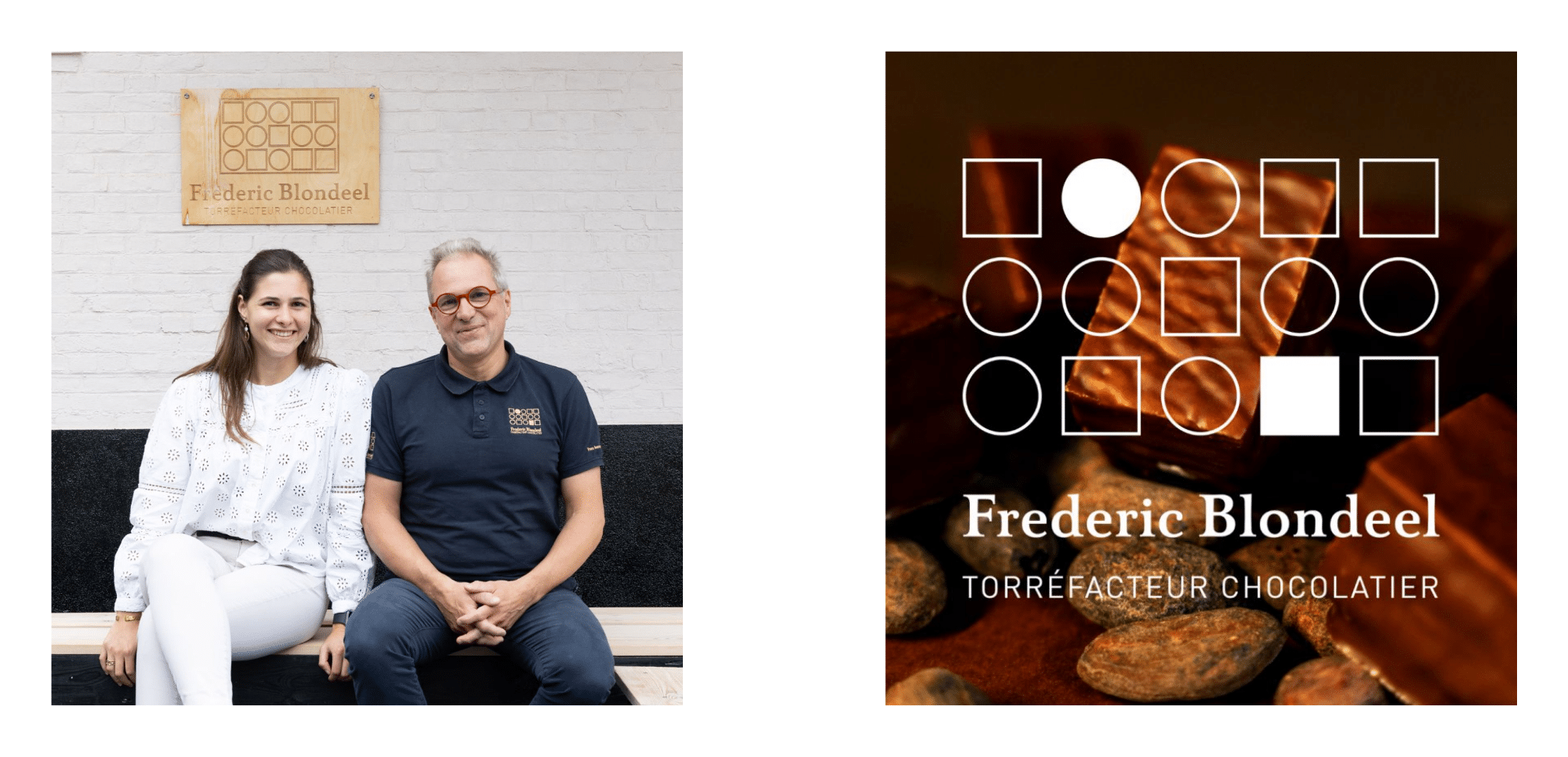
For Frederik Blondeel and his daughter Éloïse, introducing bean-to-bar chocolate into fine dining kitchens is a challenge -but one full of potential. “Restaurants are still a difficult environment for specialty chocolate”, Frederik explains, “but it’s not impossible. Young chefs often stick to familiar industrial chocolate, and most kitchens rely on fixed distributors. They want consistent flavour and reliable stock, which makes them hesitant to experiment.”
“The complexity of bean-to-bar chocolate can make chefs nervous”, he continues. “Its flavour can shift season to season, and adjusting recipes takes time, space, workflow, and technical skill. On top of it diners rarely request higher-quality chocolate, so there’s little external pressure to innovate.”
Despite these hurdles, Frederik & Éloïse see opportunities in fine dining. “Industrial chocolate has strong recognition but often lacks flavour depth. My approach focuses on taste and higher cacao percentages. Pastry teams who work with chocolate daily can really make specialty chocolate shine.”
According to Frederik, storytelling plays a careful role. “Fast-moving seasonal items leave no room for explanations, but in fine dining, presenting chocolate with a story -about origin, process, or craftsmanship, can elevate the guest experience and deepen appreciation for its complexity.”
“Belgium’s attachment to its national chocolate identity adds another layer of challenge”, he notes, “but I genuinely believe chocolate can gain the same recognition for origin that wine or coffee enjoys. Institutions like Gault&Millau are paying attention. We’re not there yet,” he says with a smile, “but it’s heading in the right direction.”
For the Blondeel father-daughter duo, bean-to-bar chocolate in fine dining is more than an ingredient. “It’s a way to challenge the palate and introduce chefs and diners to subtleties they might not otherwise experience. With the right training and mindset, it can become a hallmark of elevated chocolate in restaurants.”
JORDI ROCA -pastry visionary & ‘El Postrero’ and LORENZO TURINA – head chocolatier & chocolate maker at CASA CACAO | Spain
Raised inside El Celler de Can Roca, Jordi Roca grew up in one of the world’s most influential gastronomic families. As the youngest Roca brother -‘el Postrero’, the one who comes last, he naturally claimed the final chapter of the menu, turning desserts into playful, expressive cuisine. Named World’s Best Pastry Chef in 2014, he has always treated chocolate as a raw ingredient with terroir and personality. Together with his wife, Anna Payet, he created Casa Cacao in Girona: a bean-to-bar workshop, café, shop, and hotel that brings origin-driven cacao into the heart of haute cuisine.
Working alongside him in Casa Cacao is Lorenzo Turina, head chocolatier and chocolate maker. From Bagnolo Piedmont, Italy, Lorenzo grew up in a family of cheesemakers and trained at the Chocolate Academy in Milan. He began his career in the family’s ice cream parlour, La Fetta, before moving to Barcelona to oversee Casa Cacao’s chocolate atelier. Today, he crafts bean-to-bar chocolate for the Roca Universe cuisines and bars and chocolatessens for Casa Cacao’s boutique hotel, café and shop.
Casa Cacao began as Jordi Roca’s long-term passion project, an R&D lab exploring cacao from 2014, with full bean-to-bar production launching in 2018. What started as chocolate exclusively for their own restaurant quickly grew into a thriving venture. Today, Casa Cacao describes itself as entering a ‘second phase’, preserving its original spirit while exploring new creative directions. Since 2022, it has produced bean-to-bar chocolate for ‘Universo Roca‘, crafting custom couvertures tailored to each kitchen. Their philosophy is simple: the extraordinary often lies in its simplicity.
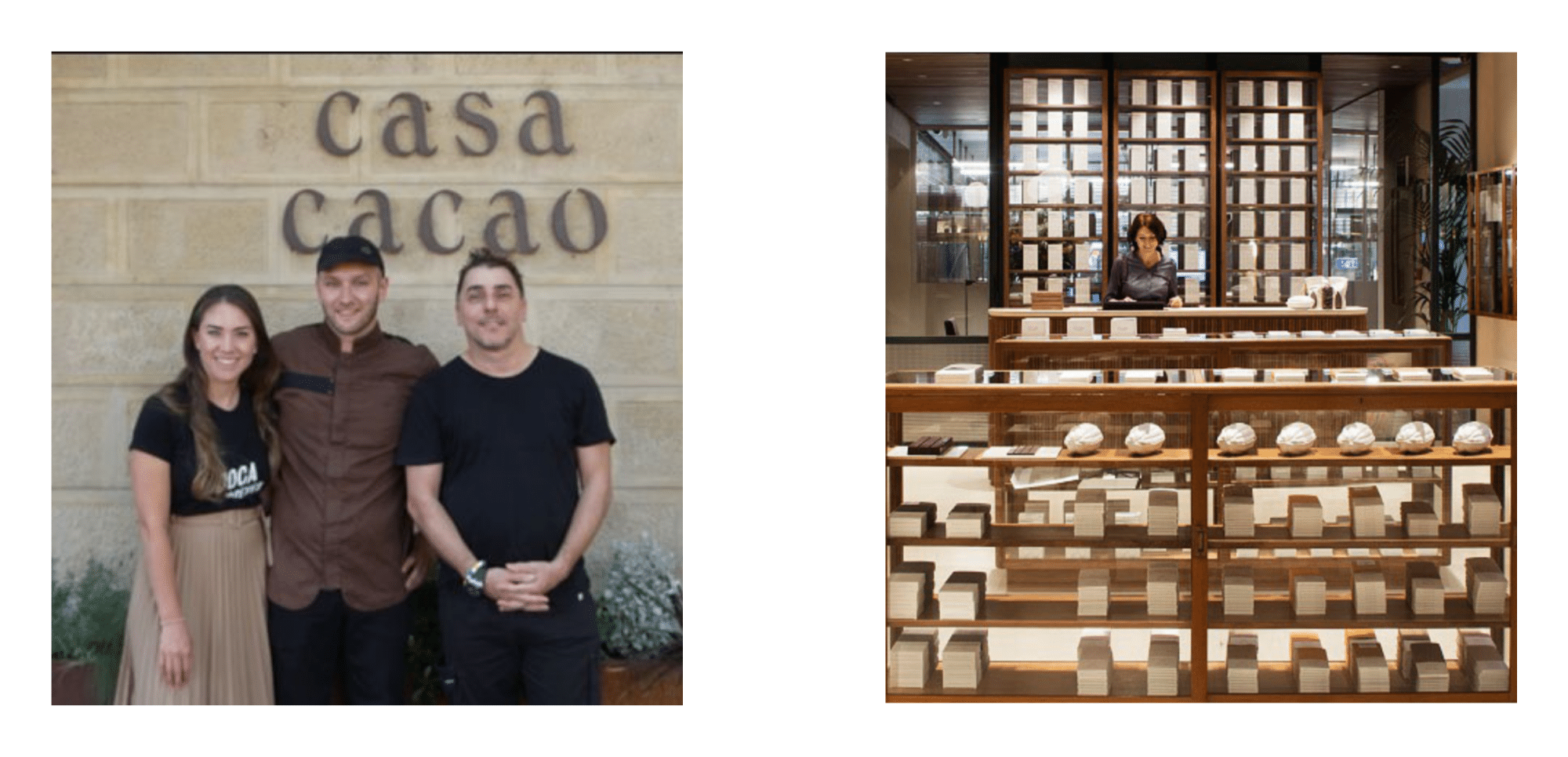
“Working from the bean allows us to achieve textures, colours, and flavours that standard chocolate simply cannot”, Lorenzo explains. “Every creation is carefully matched to its culinary role -whether in a mousse, a bonbon, or a savoury dish. In our kitchens, savoury applications are common, from foie gras with dark chocolate and truffle to rabbit with cacao, reflecting local culinary traditions.”
Chocolate is deeply woven into Universo Roca’s dining experiences. “One of our standout creations pairs a bonbon with an augmented-reality visor”, Lorenzo says. “Guests can virtually trace the cacao tree and fruit while tasting bonbons with fruits and nibs. It’s a way to highlight origin as part of the flavour experience.”
Lorenzo: “Being based in Barcelona offers unique opportunities. Many top restaurants here already embrace bean-to-bar chocolate. Guests who have dined at Can Roca often return to Casa Cacao to take home the chocolates they loved -much like buying a favourite bottle of wine after a memorable meal.”
Lorenzo is candid about the challenges specialty chocolate faces in haute cuisine. “Many chocolate makers produce bars rather than professional couvertures, leaving chefs unsure where to source quality chocolate and how to work it. Products must be service-ready, with fluid couvertures and transparent ingredients. Pastry chefs often reject chocolate without lecithin because it behaves differently. My advice to chocolate makers: engage chefs directly. If a chef loves it, they’ll stay loyal -chefs are emotional about flavour.”
“Demand for fine cacao is growing, appearing in new settings -from breweries to dessert bars. But the sector still lacks the unified push that helped specialty coffee take off”, Lorenzo concludes.
When asked which chocolate creation he recommends from Casa Cacao’s mouth-watering assortment, his answer comes with a broad smile: “Everything!”
HASNAÂ & VINCENT FERREIRA – Artisanal Chocolatiers and Bean-to-Bar Pioneers | France
Hasnaâ discovered chocolate during her time on the French version of MasterChef. She trained intensively at the National Institute of Bakery in Rouen, earning her chocolatier-confiseur diploma with top honours in 2013. In 2014, she founded Hasnaâ Chocolats Grands Crus in Bordeaux, bringing a gastronomic, origin-focused approach to chocolate. Hasnaâ speaks about cacao the way a fine-dining restaurant might speak about a rare vintage.
Her husband, Vincent Ferreira, a former art director, shaped the brand’s visual identity before training in bean-to-bar chocolate in Atlanta in 2017. He now leads La Fèverie, their workshop dedicated to crafting chocolate from bean to bar, focusing on sourcing, roasting, and collaborating with chefs.
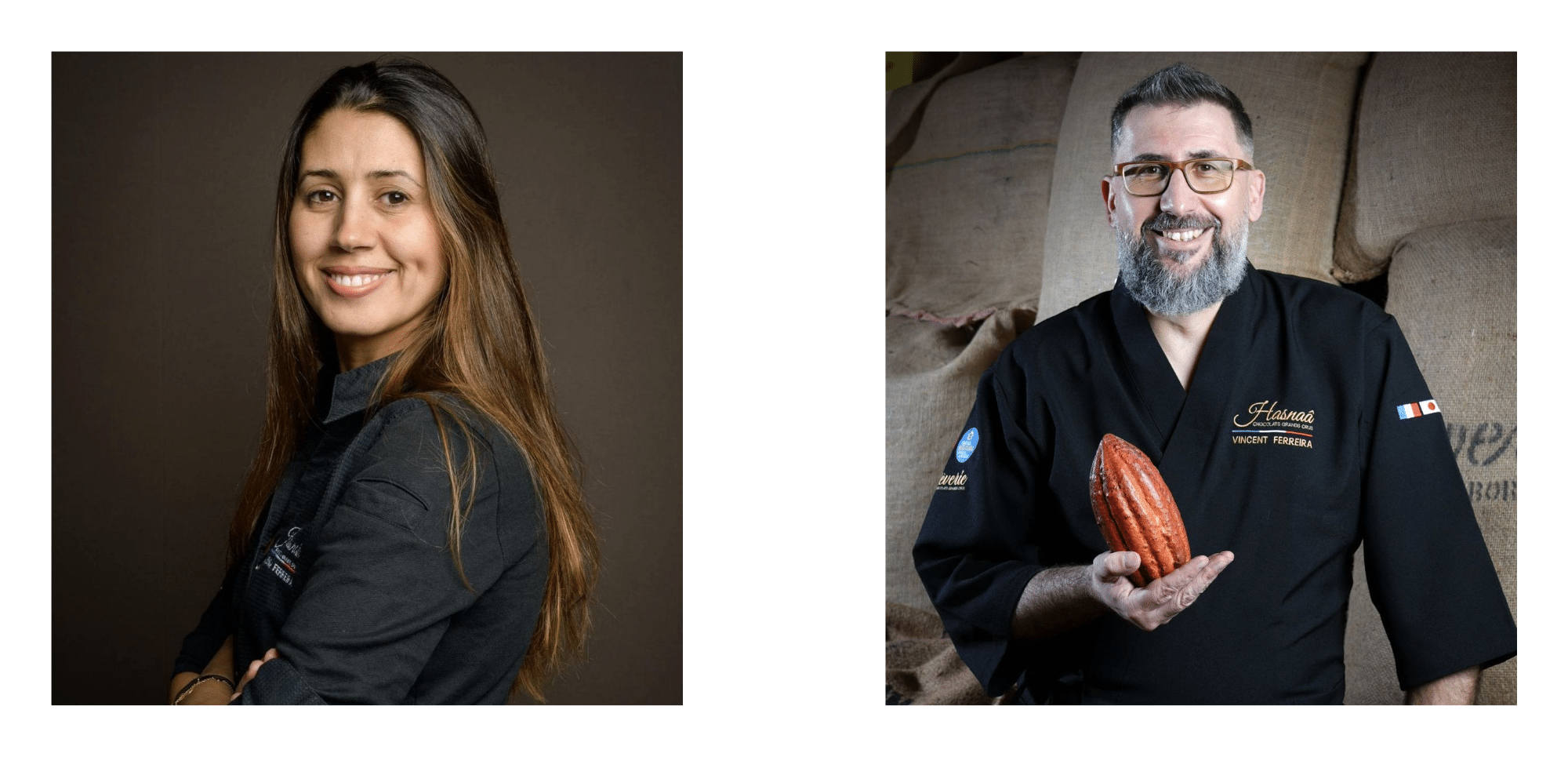
Together Hasnaâ and Vincent treat chocolate as a terroir product, shaped by origin, fermentation, and roasting -very similar to wine. Vincent describes opening a new bag of cacao as ‘like opening a Pandora’s box’ – full of surprises and possibilities. “Each bag reveals unexpected aromas, fermentations that behave differently, roasts that uncover new notes, and textures that shift with the smallest adjustments. To create great chocolate, it always starts with the beans.” As Vincent describes “You can’t make a racehorse out of a donkey.”
“Working from the bean gives us full control over flavour, texture, allergens, and recipe design”, Vincent explains. “These are elements you simply can’t achieve when working with couverture.” For the couple, every step -from sourcing to roasting, matters in shaping the final chocolate experience.
In Bordeaux, a city steeped in wine culture, restaurants already understand the importance of origin and storytelling. Hasnaâ collaborates with several venues, including La Grande Vigne, creating signature bouchées that reflect the nuances of each cacao. Specialty coffee shops and pastry houses, seeking distinctive flavour profiles, naturally become partners as well.
Price remains the largest barrier. “Only higher-end restaurants can consistently ‘afford’ specialty chocolate,” Vincent notes. Yet interest is growing. “Chefs tasting fine cacao for the first time often assume essential oils were added,” he adds -a testament to the surprising complexity of natural cacao aromatics. Consumers are adapting too. “When Hasnaâ introduced bean-to-bar chocolate, we worried it might seem overpriced” Vincent explains. “Instead, clients discovered a different kind of satisfaction. With regular chocolate, they’d finish a whole bar, but with bean-to-bar, just a few pieces were enough. The experience is more intense and fulfilling.”
Looking ahead, Vincent expects bean-to-bar chocolate to grow in haute cuisine, even if it remains a niche. “Education is crucial, especially in times of inflation“, he says. “Festivals and tasting events also help”, he adds with a smile. “And once Netflix releases a documentary focusing on the good side of chocolate, the movement will really take off.”
“Restaurants often approach Hasnaâ thanks to our reputation”, Vincent explains: “When we visit kitchens and leave samples, we plant a seed. Chefs who become curious want to see the full production process, taste each stage, and often bring their entire team. The deeper they look, the more value they see in fine cacao.”
A SLOW SHIFT BUT A REAL ONE
SWEET REVOLUTIONS TAKE TIME
Fine dining didn’t embrace natural wine, biodynamic farming, or single-origin coffee overnight -and specialty chocolate is on a similar path. The chefs who already know the difference are converted; the others simply haven’t yet had the chance to experience chocolate as an ingredient with depth, complexity, and origin-driven character. After decades of industrial chocolate dominating kitchen supply chains, the shift is bound to take time.
But the sweet revolution is happening. Makers like Frédéric, Jordi, Lorenzo, Hasnaâ and Vincent are building bridges between cacao origins, chocolate ateliers, and star studded cuisines. Awareness is rising, curiosity is replacing habit, and once a chef experiences truly exceptional chocolate, it’s hard to go back.
If fine dining is about elevating every detail, chocolate’s moment is coming. The craft is ready. The flavours are ready. And little by little, the world’s finest kitchens are waking up to just how much they’ve been missing.
And personally? After experiencing desserts or friandises made from chocolate we know, source, and trust ourselves, we’ll happily gush about them the next day -savouring every nuance, every texture, and every whisper of origin. Just like in the intro, it reminds us why this ingredient deserves the attention, respect, and creativity that the rest of the plate receives.
NOTES, KUDO’S, CREDITS & INSPO
Frederic Blondeel
Casa Cacao Girona
Hasnaâ Chocolats Grands Crus – Bordeaux
SILVA CACAO
Sign up for our newsletter and never miss any chocolate news anymore.